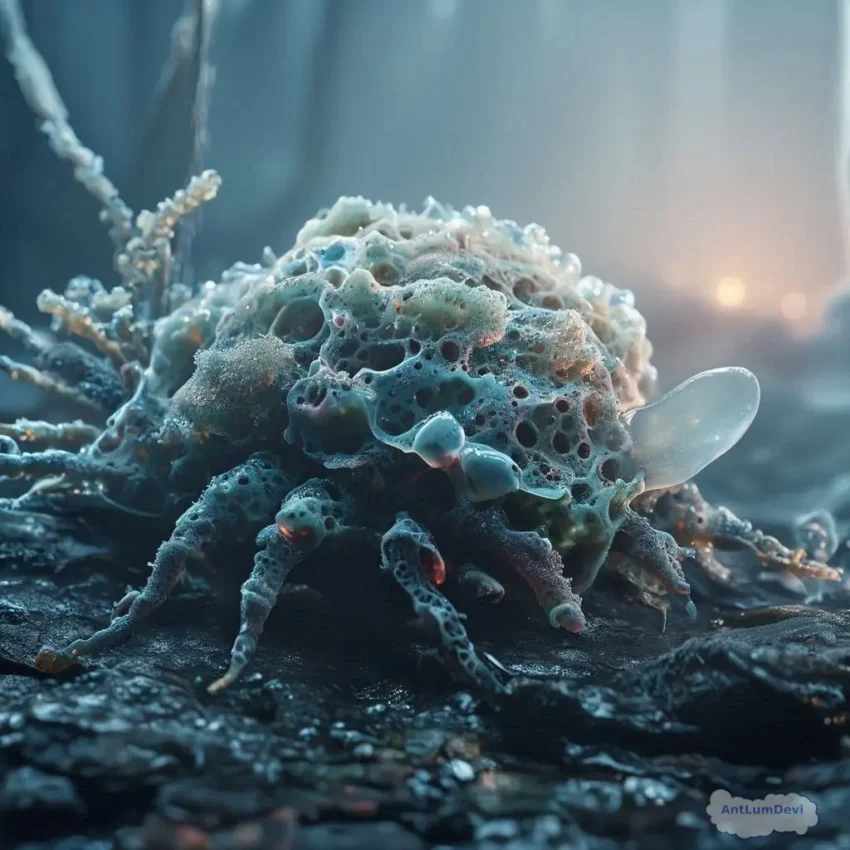
Larval form of a symbiotic organism “A shape that does not see light — and therefore can carry it.”
Biological Characteristics
Taxonomic status: larval stage of an independent species, precursor to Kryth’sol
Body structure: soft-bodied, porous, sponge‑like; morphologically open, lacking a fixed axis
Surface: absorptive membrane that does not function as a light‑sensing organ
Light inertness: unaffected by both suns; absorbs Kaelor’s yellow spectrum without damage
Energy conversion: transforms part of the absorbed light into heat and a faint red bioluminescence
Locomotion: slow, creeping movement guided by gradients of temperature and moisture
Sensory perception: orients itself through heat, vibration, and biological cues from potential hosts
Ecological Role
Function: seeks a stable host organism to provide light filtration and thermal regulation
Vulnerability: exposed to predators, desiccation, and extreme temperature shifts
Habitat: shadowed zones between the two suns; humid caves, sub‑surface systems, and twilight biotopes
Energy strategy: survives through passive absorption of light and heat rather than photosynthesis
Ethology
Behavior: non‑aggressive, exploratory; responds to thermal changes as navigational signals
Social interaction: solitary; its “communication” is purely physiological
Metamorphosis: irreversible; transition into Kryth’sol occurs after stable attachment to a host
Notes
Kryth’ir is a being that does not perceive light — and that is precisely why it can bear it. Its body is open, soft, and unanchored, as if waiting for the shape it will one day adopt. It is an organism incomplete on its own: a question without a host, an answer once joined.

Bipilon’s Note
“It doesn’t see the light, yet it carries it. If only some thinkers could manage that, the world would be far more tolerable.”