
🧬 Reproduction
females can become pregnant every 4 Passes (432 days)
gestation lasts 1 Pass
litters contain 2–6 young, but usually only 2 survive to adulthood
females choose males by the tone of their horns
deep tone = stable genetics
irregular tone = stress, illness, or nearby temporal disturbance
births occur in areas with low steam pressure, often abandoned service shafts or natural caves
Gorrathians call these places “quiet zones”
🐗 Anatomy
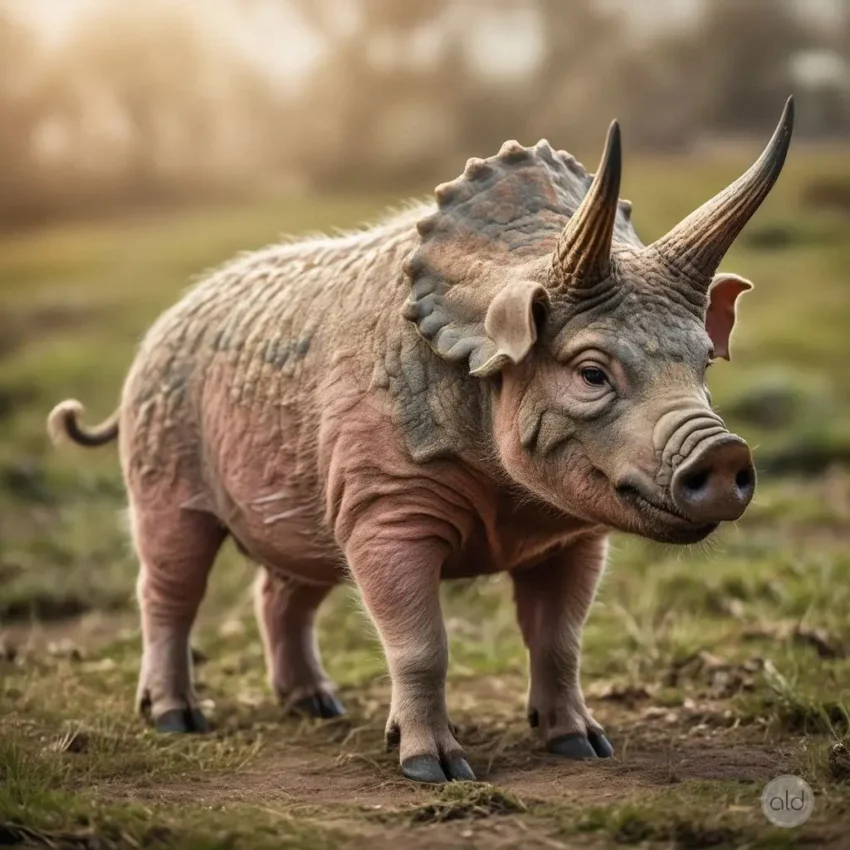
Shoulder height: 55–70 cm Body length: 90–120 cm (including the short, rigid tail) Weight: 45–80 kg (depending on age, sex, and mineral content in the armor)
Body proportions:
low center of gravity
broad chest
short, powerful legs
compact, “steam‑resistant” build
armored plates make up 20–30% of adult body weight
🦴 Horns
length: 15–25 cm
shape: slightly curved forward
surface: metallic sheen, fine ridging
function: resonance, detection of Rek’thuma, warning of temporal fractures
Inside the horns are hollow resonance channels that:
amplify vibrations
act as “temporal tuning forks”
emit a low hum under strong temporal tension, audible only to Rekk’hors and Gorrathian technicians
🛡 Armor
The armored plates are not just bone. They contain:
trace amounts of soft metals
minerals from Rek’thuma
microscopic resonators that react to temporal stress
This explains both their metallic sheen and their ability to dampen temporal vibrations.
🌱 Life Cycle
🜁 Hor’kin (newborn)
born blind, without horns or armor
body is soft, warm, covered in fine down
extremely sensitive to vibrations in the first weeks
follows its mother by the sound of her footsteps
horns and armor appear later as cartilage protrusions
feeds exclusively on milk
Minerals in the mother’s milk determine the young’s magical sensitivity:
mother consuming lots of Rek’thuma → stronger resonance
mother consuming little → weaker “temporal hearing”
🜂 Rekkin (juvenile)
horns begin to harden and gain their first resonant abilities
armor shifts from cartilage to a light metallic material
learns to find food and identify Rek’thuma
curious and often ends up in pipe systems where it shouldn’t be
chews metal objects to help harden its horns
Gorrathians protect cables and soft piping because of this
The rekkin stage is when its temporal instinct forms.
🜃 Adult Rekk’hor
horns fully developed, hard, metallic sheen
can precisely detect the direction and magnitude of Rek’thuma
can distinguish certain types of magical resonance
✨ Magic
Two days before Keth passes Veyra, tiny magical sparks begin to jump between the horns of adult individuals. Gorrathians use this as a natural calendar. They call it hor’veth — the spark of time.
🌍 Ecological Role
The Rekk’hor is a key species in the Tal’gorr ecosystem:
regulates the presence of Rek’thuma
“cleans up” residual temporal anomalies
stabilizes local temporal fields
🍽 Diet
Loves:
Rek’thuma (minerals + “condensed history”)
horns briefly spark after eating it
Also eats:
metallic lichens from pipe systems
hot roots growing near steam vents
grass, insects, small animals, fallen nestlings
⏳ Lifespan
A Rekk’hor lives for 50 Passes ≈ 15 Earth years In Sionareth, this is considered long‑lived and stable.
🧪 Evolution
Rekk’hors evolved armor in the form of a bony collar and horn‑like skin. They live across all of Tal’gorr, but in Thalgorrah — where they thrive most — they face constant danger from violent steam bursts accompanied by flying stones.
Their armor developed in response to two pressures:
Physical:
steam eruptions
flying stones
metal shrapnel
Magical:
temporal turbulence that would disrupt their biology
Their plates have a microstructure that dampens temporal vibrations.

Bipilon’s Note
Rekk’hors are fascinating. Not because they’re smart — they absolutely aren’t — but because they survive things that would kill me before I could even say ‘this looks unsafe’. If I had their armor, I might finally stop being afraid of walking past Gorrathian pipework.

„You inquire, Verdana Lux Datlesk responds…“
What is a Rekk’hor?
How does a Rekk’hor reproduce?
What does a Rekk’hor look like?
What are the horns used for?
The horns contain hollow resonance channels that amplify vibrations, detect Rek’thuma, and warn of temporal fractures. Under strong temporal tension, they emit a low hum audible only to Rekk’hors and Gorrathian technicians.
How does the Rekk’hor’s armor work?
The armor contains bone, soft metals, Rek’thuma minerals, and microscopic resonators that react to temporal stress. This structure gives the plates a metallic sheen and allows them to dampen temporal vibrations.
What is the Rekk’hor’s life cycle?
The species progresses through three stages: hor’kin (newborn), rekkin (juvenile), and adult Rekk’hor. Each stage develops stronger horns, armor, and temporal sensitivity, with the rekkin stage forming the creature’s temporal instinct.
Does the Rekk’hor have magical properties?
Yes. Two days before Keth passes Veyra, small magical sparks appear between the horns of adults. This phenomenon, called hor’veth, is used by Gorrathians as a natural temporal calendar.
What role does the Rekk’hor play in the ecosystem?
Rekk’hors regulate the presence of Rek’thuma and help stabilize local temporal fields, effectively cleaning up residual temporal anomalies across Tal’gorr.
What does a Rekk’hor eat?
Rekk’hors are omnivores that prefer Rek’thuma, metallic lichens, and hot roots near steam vents. They also consume grass, insects, small animals, and fallen nestlings.
How long does a Rekk’hor live?
A Rekk’hor lives for approximately 50 Passes, which is roughly equivalent to 15 Earth years.
How did the Rekk’hor evolve its armor?
Its armor developed as a response to physical dangers such as steam eruptions and flying debris, as well as magical pressures from temporal turbulence. The plates’ microstructure helps dampen temporal vibrations.
Related articles