
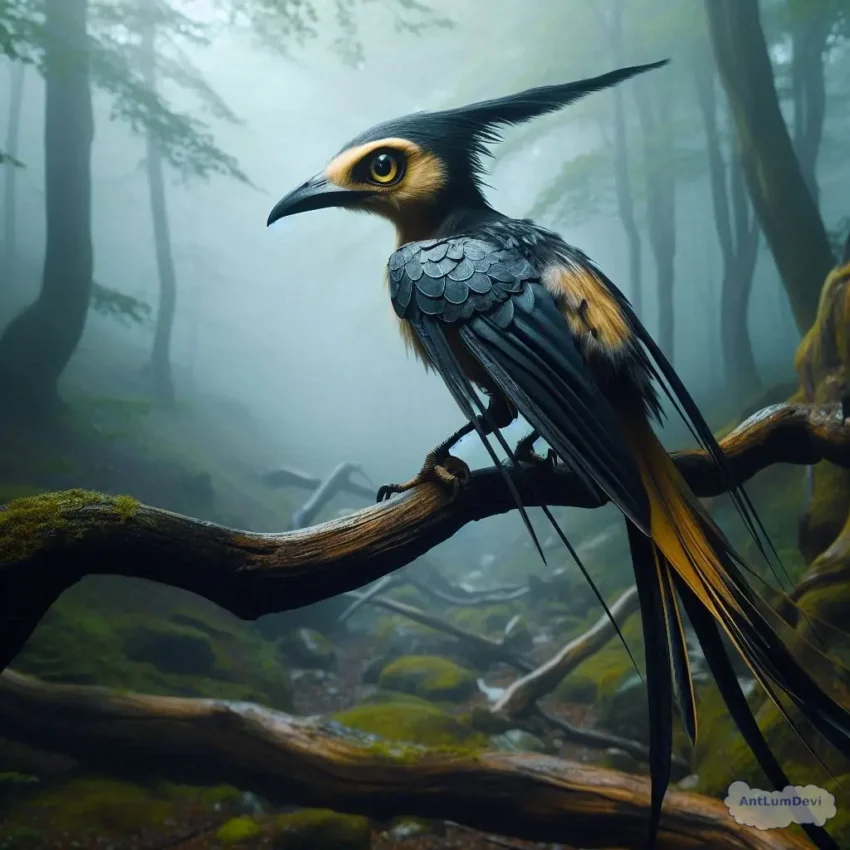
🐦 Species Overview
Body length: 30–35 cm
Wingspan: 60–65 cm
Body shape: slender, birdlike, with a prominent crest on the head
Feathers: dark blue to black, with subtle golden iridescence that shifts with the light
Eyes: large, expressive, with a metallic sheen — almost intelligent in appearance
Beak: smooth, black, slightly curved
Wings: long, feathered, elegant — capable of silent flight
Tail feathers: elongated, decorative, adding a majestic silhouette
🧬 Sexual Dimorphism
Females: have a more bell-like voice
Female beak: not solid black like males, but with a metallic blue tint
🧠 Behavior and Integrity
Saerias are creatures of high integrity. They never allow themselves to be caged or domesticated. Attempts to tame them always end the same way: the bird stops vocalizing and soon starves — refusing to absorb energy from anyone who has enslaved it.
🤝 Voluntary Alliances
Some settlements in Earein form what is best described as a “silent pact” with Saerias. If the community is honorable and its territory energetically rich, the bird may choose to settle near the village.
🔊 Whistle as a Gift Their piercing, whistle-like call is not a trained signal — it’s an instinctive expression of interest. A Saeria perceives an intruder as a source of “fresh, intense adrenaline” and claims the territory with its whistle.
🕊️ Symbolism
The presence of a Saeria is considered an honor. It means the village is strong and vital enough to attract such a majestic creature. If the bird leaves, it’s seen as a bad omen — a sign of decline or loss of spiritual protection.
🌍 Habitat
An endemic species. Saerias live in a relatively small region in northern Tal’gorr. Their population is modest but stable — not endangered.
🔥 Energetic Feeding
Saerias do not consume material food. They rely on the adrenaline aura of other living beings. They often appear near dangerous situations or around creatures experiencing intense fear or excitement — Lumins included.
🐣 Reproduction
Females typically lay one egg every two years. Both parents care for the egg and the hatchling. The young do not require conventional food — they feed on the adrenaline of their parents. Once they learn to fly, they become self-sufficient, leave the nest, and the parents can finally rest.

Bipilon’s Note
“If I had wings, I’d fly off every time Someone tried to ‘tame’ me.”